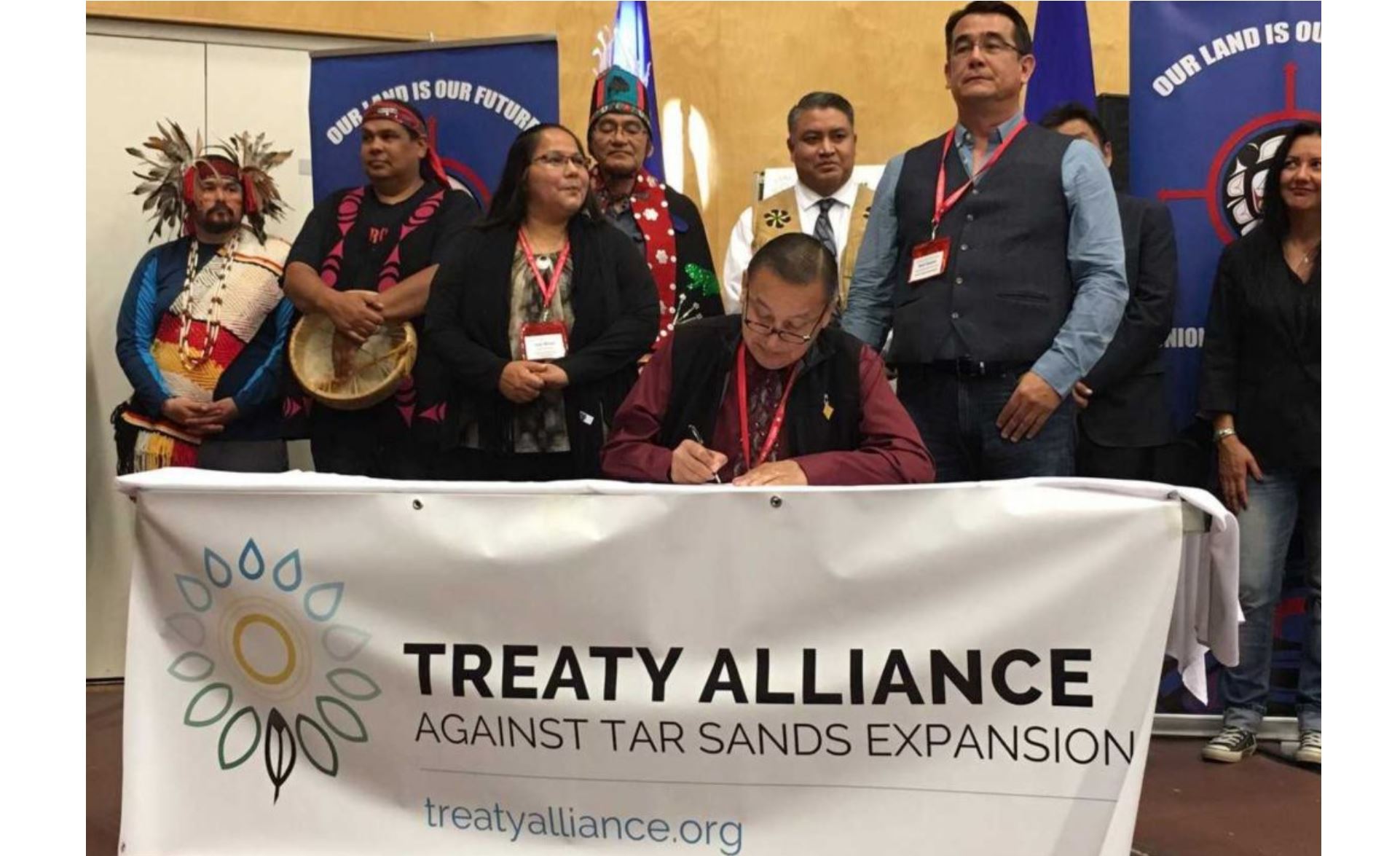
A large gathering of tribal leaders met on July 4th to declare their opposition to the Keystone XL Pipeline.
While Americans were celebrating the War on Terror, a growing surveillance and police state, the failed Drug War, mass incarceration, a legacy of colonization, and other American pastimes, tribal leaders and chiefs in North America used Independence Day to officially oppose the controversial Keystone XL pipeline.
The project is a nearly completed 1,700-mile pipeline carrying toxic tar sands from Alberta, Canada to Houston and other Gulf Coast refineries before being primarily exported overseas. The pipeline would carry 830,000 barrels of diluted bitumen per day. It has been delayed and rerouted over environmental concerns and resistance from citizens losing their land through eminent domain.
While gathering in the Black Hills of South Dakota, the Tribal leaders of the Great Sioux Nation, the Ponca Nation in Nebraska and Oklahoma, and the Blackfoot confederacy met with a delegation of Chiefs from First Nations across Canada. Each of these nations’ land will be affected by the completion of the Keystone XL.
The leaders of these sovereign nations met in support of the Treaty Alliance Against Tar Sands Expansion and announced a new “cross-border” alliance to stop the Keystone XL pipeline. The addition of the new tribes and first nations brings the count to over 130 first nations and Tribes who have signed the treaty declaring an opposition of four different pipelines. These pipelines include TransCanada’s Keystone XL, Enbridge’s Line 3 pipeline through Minnesota, Kinder Morgan’s Trans Mountain Expansion through British Columbia and TransCanada’s Energy East.

No comments:
Post a Comment